|
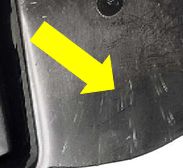
Silver
streaks are the splash appearance of moisture, air, or charred plastic
particles on the surface of a moulded part, which are fanned out
in a direction emanating from the gate location.
Causes
of silver streaks
Silver streaks can be caused by:
- Moisture
- Plastic materials absorb a certain degree of moisture during
storage. If the material is not dried properly before moulding,
the moisture residing in the resin will turn into a steam during
the injection process and splay on the surface of the moulded
part.
- Air
- During the plasticization period, a certain amount of gas can
be trapped and blended into the melt material. If the air does
not escape during the injection process, it could splay out on
the surface of the moulded part.
- Degraded
(charred) plastic particles - There are a couple of reasons degraded
(charred) plastic particles will splay on the surface of a moulded
part.
- Material
contamination - When moulding with two materials, as you switch
from one material to another, the residual particles left in the
barrel could be charred if the second material is being moulded
at a higher temperature. In addition, contaminated, rejected parts
and regrind will re-contaminate virgin material in the next batch
of moulded parts.
-
Barrel temperature - Improper barrel temperature setting may degrade
polymer molecules, and they will begin to char.
- Shot
volume - If the shot size is below 20 percent of the machine injection
capacity, especially for temperature-sensitive materials, the
melt resin will remain in the barrel too long and will begin to
degrade.
|